WELCOME TO THE FIRST OFFICIAL ASSOCIATION OF ÍNDIO GIGANTE IN THE UNITED STATES
The Índio Gigante Head: Comb, Skull, Dewlap, and Wattles
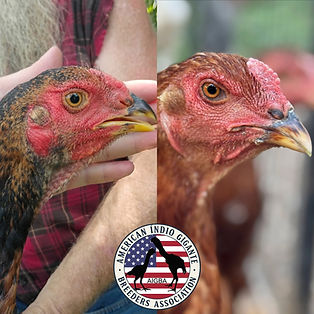
The head of the Índio Gigante is one of the breed’s most distinctive features. Correct type does not come from one exaggerated characteristic. It comes from the skull, face, comb, beak, eyes, earlobes, dewlap, and wattles working together to create a strong, balanced, and unmistakably Índio Gigante expression.
This is also an area where terminology causes considerable confusion, especially when the central dewlap is mistaken for an oversized wattle or when every pea-combed bird is assumed to have the same skull structure.
Correct Head Structure
The Brazilian standard describes the Índio Gigante head as medium to large in length, harmonious, and convex. It should have enough depth and substance to remain proportional to the bird’s long neck and enormous frame.
The skull should not appear excessively narrow, shallow, or delicate. A fine head may look disconnected from the powerful body and weaken the overall breed type. At the opposite extreme, the head should not be coarse, distorted, or unnaturally exaggerated.
Correct head structure should be:
-
Proportional to the neck and body
-
Sufficiently broad and deep
-
Convex rather than completely flat across the top
-
Strong through the skull, face, and base of the beak
-
Harmonious when viewed from both the side and front
The beak should be medium in length, vigorous, and slightly curved. The eyes
should be large and prominent, contributing to the breed’s alert expression.
Cushion Comb and Pea Comb
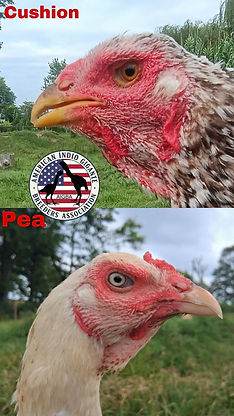
Both the cushion comb, known in Brazil as the crista bola, and the pea comb,
or crista ervilha, are included within the Brazilian breed standard. Both should
be clearly defined, firmly placed, and proportional to the head.
The cushion comb is compact, rounded, and comparatively smooth. It sits closely on top of the skull and contributes to the broad, powerful appearance strongly associated with the modern Índio Gigante head.
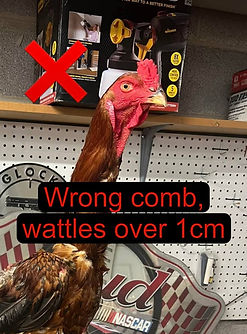
The pea comb is generally lower and more elongated, with the longitudinal ridging characteristic of that comb type. There is nothing inherently wrong with a correctly formed pea comb, and its presence alone does not make a bird unworthy of consideration.
However, accepting a trait and preferring it are not necessarily the same thing.
Comb Type and Skull Structure
As Ítalo Magnus Magalhães Moreira has explained, certain pea-combed lines have
historically been associated with finer, narrower, and more delicate heads.
Crista-bola lines have more commonly displayed thicker,
better-developed, and more proportional head structures.
The important word is lines.
The comb does not physically create the skull beneath it. A cushion comb does not
automatically guarantee a broad and powerful head, and a pea comb does not
automatically produce a narrow one. These traits have frequently been selected
together within particular bloodlines, creating an association between comb type
and the head structure commonly found in those lines.
In practice:
-
A crista-bola bird may present a larger, deeper skull and heavier facial structure.
-
A pea-combed bird may sometimes show a finer head with less width,
depth, or skull mass.
-
Either comb can occur on a structurally correct or structurally incorrect head.
-
Skull structure must always be evaluated independently from comb type.
Selecting only for the presence of a crista bola, without evaluating the skull underneath it,
can still produce an inferior head. Likewise, dismissing every pea-combed bird without considering its complete structure
could mean discarding an otherwise valuable bird.
The objective is not simply to place a preferred comb on the bird. The objective is to develop the entire head as one harmonious structure.
AÍGBA’s Direction
AÍGBA recognizes that both cushion and pea combs are found within the Brazilian
standard and the breed’s established population. However, we will consistently
encourage the cushion comb over the pea comb in
our breeding and exhibition direction.
This is a preference, not a claim that every pea-combed bird is incorrect or that
every cushion-combed bird is automatically superior.
The crista bola has become an especially recognizable feature of the modern
Índio Gigante. It is commonly associated with the heavier, broader,
and better-developed head that breeders have worked to establish through
long-term selection. Encouraging it also gives American breeders a clearer and
more consistent direction while the breed is still developing in the United States.
AÍGBA’s preference is based on:
-
The recognizable modern Brazilian phenotype
-
Greater consistency in head type
-
The broad, powerful expression desired in the breed
-
Clearer distinction from more ordinary domestic and ancestral fighting-fowl characteristics
-
The continued refinement of the Índio Gigante in the United States
Pea-combed birds still have a place within the breed and may possess valuable size, structure, movement, fertility, and genetic diversity. However, when two otherwise comparable birds are being evaluated, AÍGBA will encourage breeders to select the bird with the correct, well-defined cushion comb and the stronger overall head.
This allows us to preserve useful genetics without losing sight of the phenotype we ultimately want to establish.
The Dewlap: Barbela de Boi
The central dewlap is one of the most characteristic features of the modern
Índio Gigante head and neck.
In Brazilian terminology, it is called the barbela de boi, meaning “ox dewlap.”
It is a single central fold of fine, soft skin extending beneath the beak and along
the upper throat. It is not simply an oversized conventional wattle.
A correct dewlap should:
-
Be centrally positioned
-
Hang as one structure rather than a separated pair
-
Have fine, soft, reasonably uniform skin
-
Flow naturally from the lower head and throat
-
Complement the head without appearing twisted or irregular
The Brazilian standard permits a single barbela de boi without the size restriction applied to paired wattles. This distinction is extremely important when evaluating the breed.
The goal is not merely loose skin or maximum length. The dewlap must have the correct central placement, texture, and structure.
Wattles Are Not the Same as a Dewlap
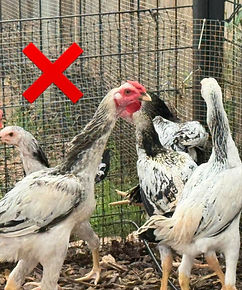
Conventional wattles are two separate appendages hanging beneath the beak.
In Portuguese, these are described as barbelas duplas.
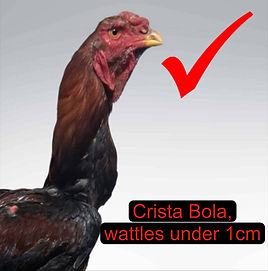
The Brazilian standard allows:
-
Total absence
-
Paired wattles measuring no more than approximately one centimeter
-
A single central barbela de boi without a specified maximum size
Large paired wattles are undesirable. They interrupt the distinctive outline of the
Índio Gigante head and create a more conventional domestic-chicken appearance.
They are also more exposed to injury, frostbite, and heat loss.
A bird should not be described as having an excellent dewlap simply because it has a
large amount of tissue hanging beneath its beak.
The evaluator must determine whether
the structure is truly a single, centrally positioned dewlap or two enlarged conventional wattles.
That anatomical distinction is more important than size alone.
Evaluating the Complete Head
No head trait should be judged in isolation.
A crista bola sitting on a narrow, weak skull does not create a superior head. A long dewlap cannot compensate for poor placement, coarse texture, or an unbalanced face. Likewise, a structurally strong bird should not be dismissed solely because it carries a pea comb.
The complete evaluation should consider:
-
The width, depth, length, and convexity of the skull
-
The strength and proportion of the face and beak
-
The definition, shape, and placement of the comb
-
Whether the throat structure is a true central dewlap or paired wattles
-
The balance between the head, neck, and body
The Índio Gigante is not defined by the largest comb or the longest piece of loose skin. Correct type comes from proportion, structure, and balance.
The crista bola and barbela de boi have become defining features of the modern phenotype, but responsible selection must go deeper than surface appearance. As Ítalo’s explanation emphasizes, the real discussion is not simply cushion comb versus pea comb. It is about the quality of the skull, the strength of the entire head, and the consistency with which those characteristics are passed forward.
AÍGBA will continue respecting the complete Brazilian standard while encouraging the cushion comb as the preferred direction for American breeding programs. That approach acknowledges the breed’s full genetic foundation while providing a clear path toward greater consistency, stronger breed identity, and continued improvement.